Research
Foundational Academic Research
Logo VirtuosisLogo EPFL
Virtuosis AI originated from Lara's research at EPFL, where she worked with behavioral psychologists and psychiatrists to create an AI offering objective feedback on communication and well-being—typically seen as qualitative. With a background in robotics, Lara saw AI mainly focused on automation and replacing humans, so she aimed to develop an AI that enhances communication and collaboration, keeping humans at the core.
HUG Hospital in Geneva
Montfort Hospital in Ottawa
Augmented Teleconsultations to support Parkinson's Disease Diagnostic
Logo VirtuosisLogo uOttawa
The collaboration focuses on enhancing primary care teleconsultations to improve early detection of Parkinson’s disease using AI-powered voice analysis. The project addresses diagnostic delays due to subtle symptoms and limited recognition by primary care physicians. It integrates AI technologies identifying vocal biomarkers to support clinical reasoning and patient triage. The outcomes include developing simulations for physician training, co-analyzing interaction patterns with AI, and defining educational strategies to empower doctors in utilizing AI for accurate and confident diagnoses.
Seniors' Quality of Life
Logo VirtuosisLogo HUG
Increasing life expectancy brings challenges such as isolation, loss of autonomy, and chronic or cognitive disorders. To address these issues, Virtuosis AI, EHL, and the SDSC are partnering with home care associations, and healthcare professionals to detect early signs of psychological distress due to social isolation and cognitive decline by analyzing voice. The goal is to provide caregivers and families with personalized indicators to support timely and compassionate interventions.
HUG Hospital in Geneva
Montfort Hospital in Ottawa
Augmented Autonomy Advisors to Support Early Frailty Detection
Logo Virtuosis
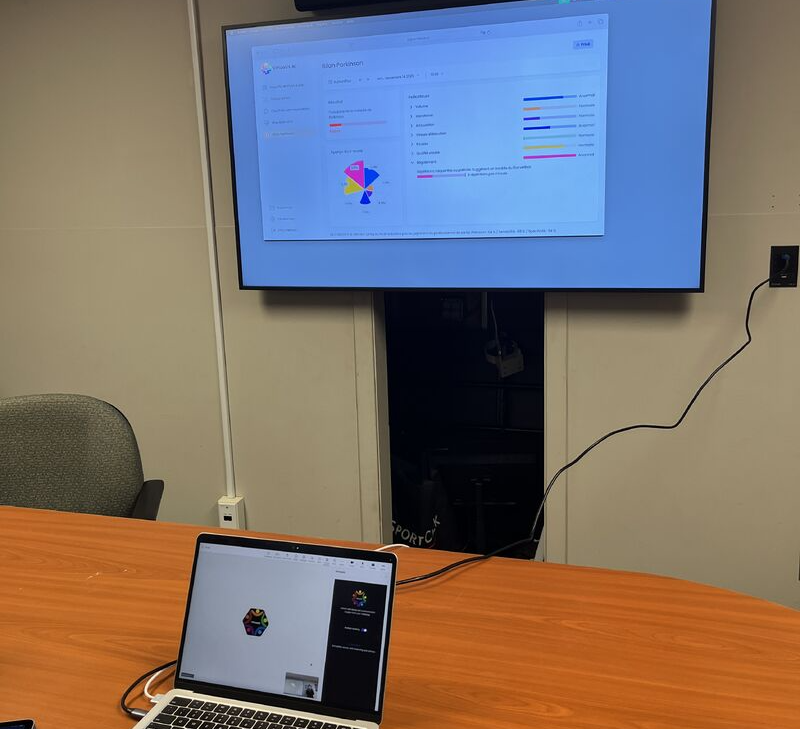
A real-world pilot deploying Virtuosis’ AI voice biomarkers to support early detection of psychological distress in older adults living at home. The solution analyzes a phone conversations and returns a real-time risk score based on acoustic features such as tone, intonation, and speech rhythm, helping home-care services and autonomy advisors prioritize follow-up and tailor prevention plans. The project assesses clinical and organizational impact, as well as adoption and usability, through a mixed quantitative and qualitative evaluation design. It follows a privacy-by-design approach with informed consent, HDS hosting and GDPR/DPIA alignment.